It has been common knowledge and practice among our ancestors in South Asia that upholding welfare of animals is a responsibility of citizens of a nation. Every species not only has the right to live, rather its living is essential for the wellbeing of humans. There is no single animal which does not benefit humanity. If humans are considered the superior intelligent beings on this planet, ensuring welfare of other life in our planet becomes a human responsibility. The human-animal bonding can be affected by the cultural, religious and societal changes that occur at various times in history.
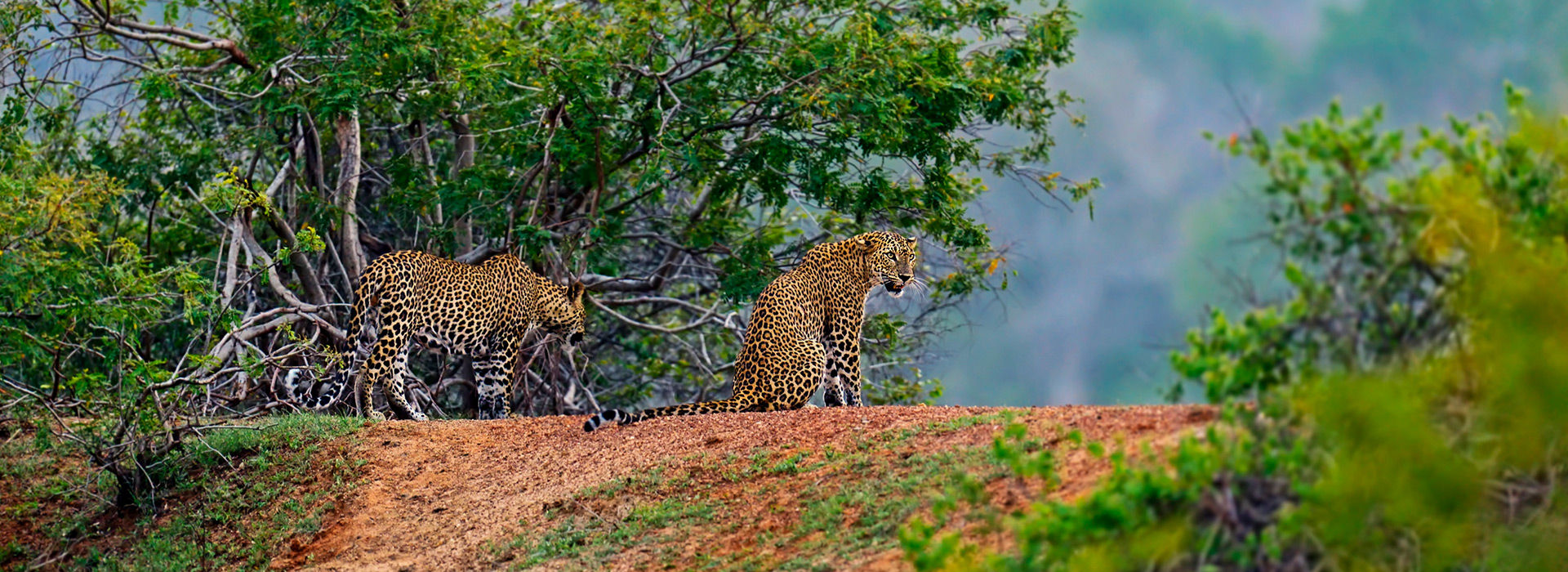
Biodiversity hotspots are areas that carry an unusually high number of endemic species that have the richest ecosystems in the world, and are home to many vulnerable populations that depend on nature to survive. Asia-Pacific region has the most number of ecological hotspots continent-wise. Sri Lanka is one of 16 important regions in Asia-Pacific, having an abundance of ecosystems and many endemic animal species ranging from fish, amphibians, reptiles, birds, mammals, land snails, and freshwater crabs. Sri Lanka’s range of animals has a ‘Big Four’ plus one (leopard, elephant, sloth bear and wild Asiatic water buffalo, plus the blue whale found offshore).
Tropical rain forests on land and coral reefs in marine systems are among the most biologically diverse ecosystems on Earth, and about 20,000 new species are discovered each year. However, habitat destruction is a leading threat to those ecosystems. Sri Lanka has the second highest population density of humans in the Asian region. The habitats of many species get lost due to human settlements, agriculture and farming, landfills in low lying areas, fires, encroachment and timber extraction, use of pesticides and fertilizers, mining of corals, gems, and minerals, irrigation projects and introduction of exotic or invasive species. The FAO reports that the livestock sector generates more methane emissions (a greenhouse gas 23 times as warming as CO2 (Carbon Dioxide)) than transport, and is one of the most significant contributors to habitat destruction due to denudation of forest cover to create grassland for high producing milking cows. When butterflies disappear from denudation of its habitat and from chemical poisoning, then the flowers, the undergrowth, the hillside, and the forest will disappear, followed by animals, birds and humans. When the coral reef is dynamited for jewelry, the sea gushes in to land, taking away both the land and lives. The intensive conservation “Project Tiger” launched in India in 1973 demonstrates how an entire human settlement benefited from an increase in forest cover simply by preserving one animal species. Reforestation of degraded habitat helped to buffer the communities against the impacts of river siltation and flooding. Similarly, the “Leopard Project” established by the Wilderness and Wildlife Conservation Trust (WWCT) in 2000, focusing on conserving the leopard (Panthera pardus kotiya) in the central highlands of Sri Lanka since it is an ‘umbrella species’ under which all other species can be conserved and protected. A forty square kilometer ridge forest the ‘wildlife corridors’ was conserved to foster human-leopard co-existence, which is also a vital watershed region.
Sri Lanka being a country with a historical background of compassion towards animals has a growing interest and concern on welfare of animals. More than one king in the history of this island had fostered and practiced welfare of animals. The declaration of Mihintale as a sanctuary for wildlife by King Devanampiya Tissa in the 3rd Century B.C. is probably the first of its kind in the world. When the increase in productivity as an economic metric is applied, the welfare of animals and conservation of ecosystems tend to get overlooked. Let’s uphold the nation’s Constitution which assures to protect, preserve and improve the environment for the benefit of the community, and further states that it is the duty of every person in Sri Lanka to protect nature and conserve its riches.
By: Professor Emeritus Indira Nanayakkara Silva PhD, FSLCVS, BVSc.
(This article was published in YZA Journal)