Why Sea Turtle Conservation is Important?
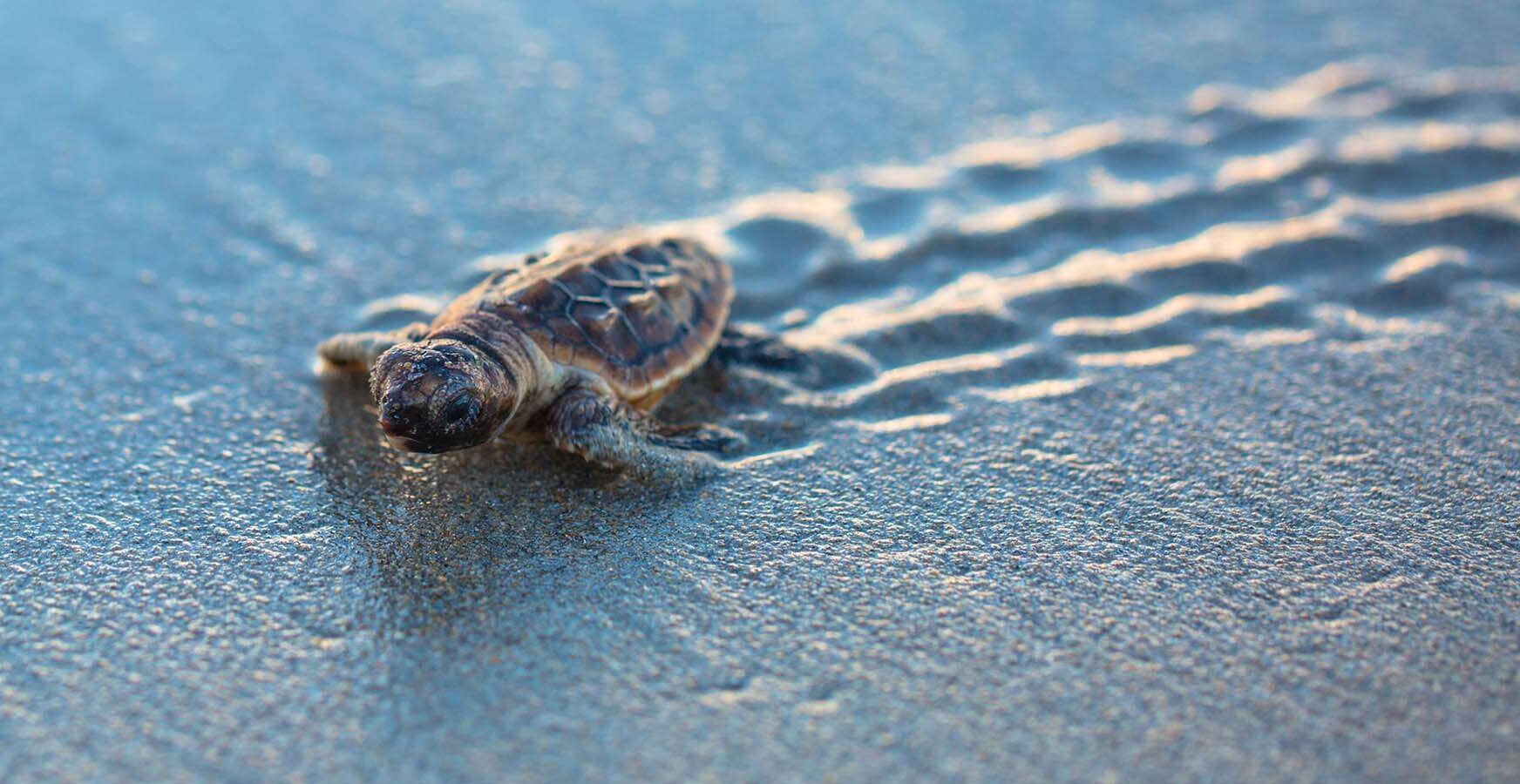
There are Five of the seven sea turtle species (Hawksbill, Green, Loggerhead, Olive Ridley, and Leatherback) that are regularly found in Sri Lankan waters and all of them are Endangered (EN) as per the National Red List of Sri Lanka (2012) and Hawksbill and Leatherback turtles are critically endangered (CR) as per Global Red List. These species are facing severe threats due to habitat destruction and alterations, consumption and illegal trade of eggs and meat, predation by dogs and other animals, unscientific hatchery practices, entangling in fishing gear, plastic and other marine debris, global warming, and turtle shell trade.
Helping Hands in Protecting the Last Remaining Sea Turtle Nesting Habitats in South Colombo Area”.
It was observed by our organization that remarkable service done by Sri Lanka Coast Guard with S.L. Navy in protecting the mother Turtles who come to the shore to lay eggs and to conserve their eggs on the western coast from Colombo starting from Galle face to Mt. Lavinia.. The methods adopted by the Coast Guard personnel are based on scientific methods, but they operate with minimal facilities. Certain centers are supported by volunteers at present, yet proper involvement for the overall protection of the habitats and the species is important.
We were especially concerned about the points of the newly established beach between the port city and Galle Face and the points in Wellawatte, Dehiwala and Mt. Lavinia, because these sites are highly important as the last remaining Sea Turtle Nesting habitats in the South Colombo area. As well as these sites are unknown to many and therefore minimal basic resources have been received. LNC initiated a scientifically driven, stakeholder-inclusive total package to ensure this coast and its habitats are present for turtles and other coastal fauna that can also support human well-being.
As an immediate measure the first national workshop was organized by LNC to create awareness on Protecting the Last Remaining Sea Turtle Nesting Habitats in South Colombo Area on 6th June, 2023 at the Navy Headquarters, Colombo to create awareness and educate the authorities and the public on the urgent need.
With the objectives
- Protecting the Last Remaining Sea Turtle Nesting Habitats in South Colombo Area
- Supporting and strengthening the turtle conservation efforts of the Coast Guard
- Habitat enrichments of the turtle nesting sites
- Ensure awareness amongst practitioners and the community
It was attended by many key higher authorities and field officials attached to coast conservation department, Sri Lanka navy, Sri Lanka Police, Department of wildlife, and other interest groups.
Formation of TACHUP
Due to the extensive collaboration required, a dedicated group was formed. With the advice and guidance of Prof. Sevvandi Jayakody and our past President Mr. Samantha Gunasekera, the gap was identified and the need to take immediate steps to protect the nesting turtles along the beaches around Wellawatta was formalized. Many Conservation Organizations and Universities, students, Professors and other volunteers of varying age groups who were all concerned about the continued survival and protection of sea turtles, were contacted and provided a platform from which we could coordinate in this task.
In 2024 the formation of Turtle conservation programme as a broader collaboration established with multiple stakeholders as The Turtle and Coastal Health United Programme, (TACHUP) as a dynamic coalition made up of individuals and institutions under one umbrella with further habitat conservation and replanting and maintaining the coastal vegetation. This significant group is a partnership with dedicated and committed members of Wildlife and Nature Protection Society (WNPS), “Wildkids” of WNPS, AQRES of Wayamba University, and the Nature Beyond Horizon organization of Horizon Campus and interested individuals. TACHUP was approved by the Department of Wildlife Conservation and the Sri Lanka Coast Guard as a programme supporting turtles and coastal vegetation management.
Part of the plan was to obtain data that can be used for scientific analysis and coordinating conservation efforts in future.
Most of the volunteer group are based around Colombo and we have focused on the protection of the nesting of sea turtles along the beaches of Colombo south coastline. This extends to the protection of the beach habitat, which is declining fast. Turtles need sandy beaches and the proper plant cover to have the right conditions to lay their eggs, and most beaches along Colombo coastline have very much lost suitability for this purpose.
Beach plastic pollution threatens Turtle habitats
It is observed that there is a huge amount of plastic that is being washed up on shore daily and getting buried under the sand, making it extremely difficult for the mother turtles to dig the nest, many abandoning the digging halfway when plastic debris is met and provides resistance.
Our first season and Turtle egg collection
Our project was initiated as a support group for the turtle egg collection, incubation and release of hatchlings, along the coast of south Colombo, where now for many past years a large number of Olive Ridly Turtles have been coming ashore to nest. During last four seasons, which is during the months of November to April, turtle egg recovery was done, with the assistance of the Colombo Coastguard centers. This was handled mostly by Mr. Caminus Thomaspillai, Volunteer turtle expert and protector.
Donations to support the volunteers
With the support of the TACHUP group, we have been trying to find funds to donate necessary equipment such as wire mesh, asbestos or metal sheets to make sandpits and keep the eggs and emerging hatchlings safe, cloth bags for egg collection and any other requirements. Identification vests were provided for the volunteers to wear while on duty.
Added to that, our main concern was to find volunteers to help with keeping a lookout during the nighttime along the coast for the emerging sea turtles and keep watch over them to ensure their safety while on land and help with collection of eggs and re-locating them to the safe areas allocated for incubation.
Earlier this was at the Coast Guard center at Wellawatta, but this season, as the ground there was not deemed suitable, most of the eggs were kept for incubation at the Police post at Wellawatta beach. The Inspector General of Police and the Police Environmental Division, on our request, have been very helpful and provided the much needed and appreciated assistance for this.
Turtle egg collection and incubation
Over 15,000 eggs were collected this season from about 150 or nests, and the baby turtles are being released daily to the ocean as soon as they are ready. TACHUP group was only confined to the Wellawatta area as there are other groups involved in turtle conservation in Dehiwala – Mt. Lavinia and Panadura areas.
A data base has been created and we are collecting data daily of the turtles coming ashore to nest, size, preferred nesting sites, number of eggs and hatchlings, which will be available for any scientific study at a later date as necessary, and an island wide platform to enter data will be created eventually. A special appreciation for Mr. Caminus Thomaspillai, without whose efforts most of the turtle eggs would have been destroyed by humans and other predators, and coastal erosion.
Other key activities during 2025
Turtle Awareness session for ICBT students was done on 10th September, for the student volunteers willing to join in beach patrol in the coming season.
TACHUP planning meeting for the upcoming Turtle season
The planning meeting was held on 11th October for the upcoming Turtle season to finalise the activity plan, at WNPS head office in Battaramulla. It was attended by all the partners of TACHUP.
Volunteer training during the upcoming Turtle season
WNPS along with LNC conducted a training session for the volunteers, for the patrolling during the new season. This was held on 1st of November, at the John Keells Auditorium, No. 186, Vauxhall Street, Colombo 2, from 2:00pm – 6:00pm. The session consisted of two segments. The first segment was held at the auditorium, to educate about the activities the patrollers will be engaged in, what to avoid when encountering a turtle, the safety guidelines that must be followed and volunteers past experience in patrolling.
The education and awareness session was led by Prof Sevvandi Jayakody and Mr Samantha Gunasekera. A session on Plastic Pollution was done by Dr. Sajith Edirisinghe.
LNC participation was let by TACHUP subcommittee Chairman, Mr Premnath Ratnaweera, Mr Jayantha Suwandaratne, Mr Maheel Senaratne, Mr Rohitha Perera, Ms Charitha Devapriya, and Ms Manoja Weerakkody (TACHUP Coordinator).
The second segment was a visit to the beach, where there was a very detailed mock demonstration conducted on how to relocate eggs and an overview of collecting and logging data on turtles and turtle eggs. We thank Walkers Tours for very generously facilitating this training, and for their logistical support.
LNC Exco member, Mr Dilup Chandranimal, the Habitat restoration Adviser led the discussion on beach habitat and vegetation restoration, and the Collection of Turtle eggs and restoration was well demonstrated by Ms Malka Perera and Mr Aravinda de Soyza from YZA.