
Devastation caused by heavy rains in the early hours of November 22 2025 resulting in a Kadugannawa hill top collapsing onto a roadside tea shop and several vehicles, killing 6 and injuring 4 persons, brought to my mind the lyrics of the famous song “Blowin’ in the Wind”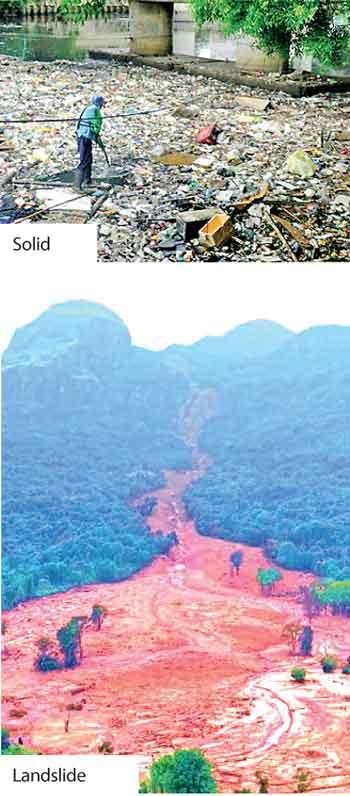
“How many years must a mountain exist before it is washed to the sea?
The answer my friend, is blowing in the wind…” (Bob Dylan 1962)
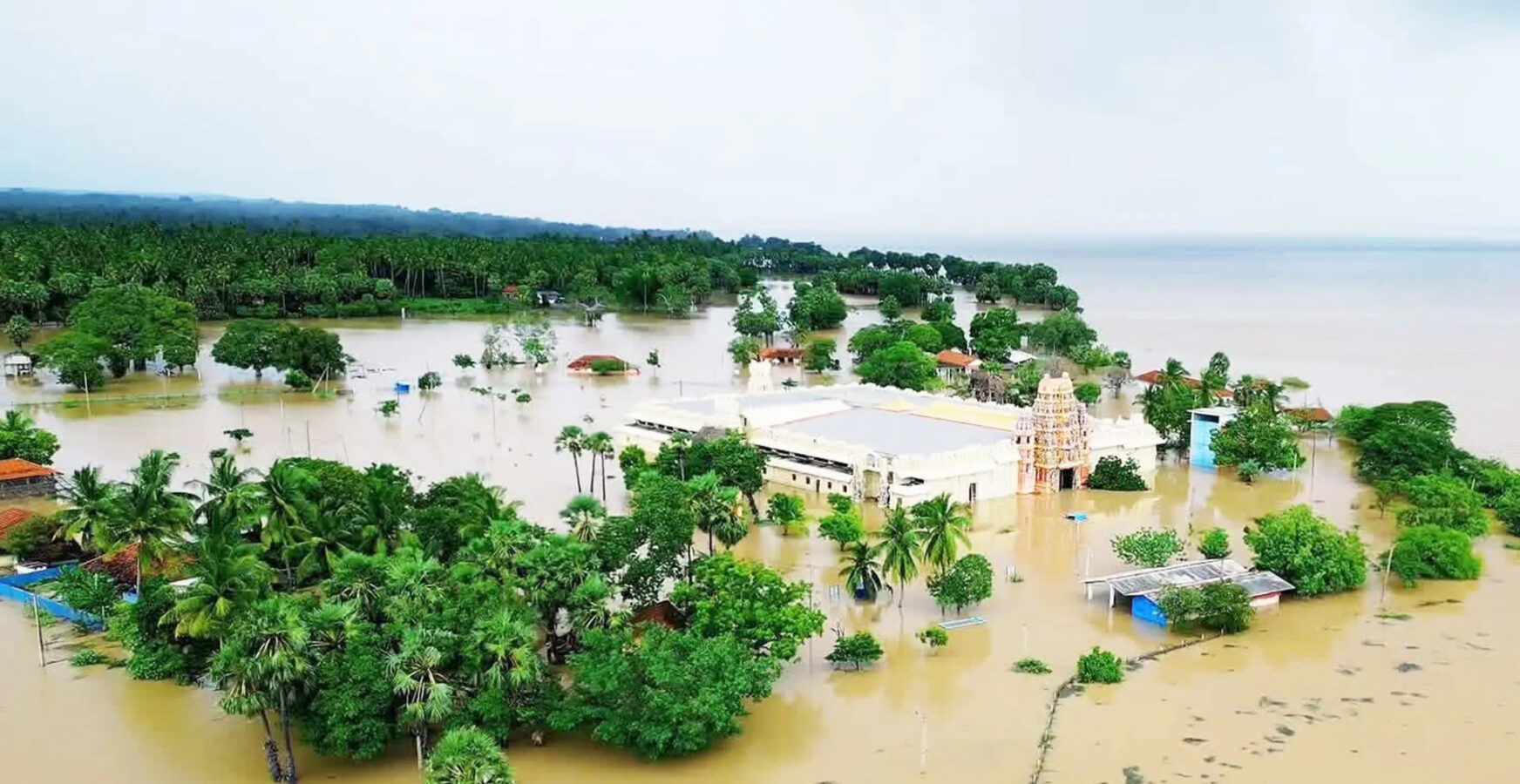
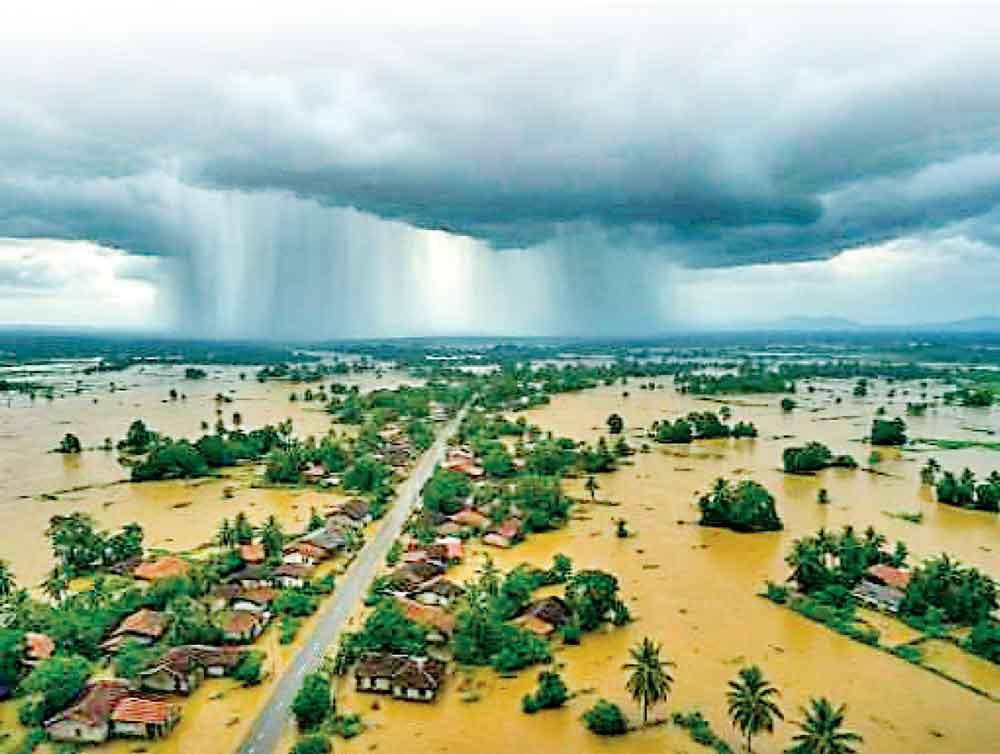
Fatefully, Cyclone Ditwah swept through Sri Lanka on November 28 2025, dropping 10% of the annual rain fall within a single day, spreading catastrophic destruction across the country, excepting the Southern province.
The damage caused by severe rains and floods of Ditwah in almost all districts, the largest floods since 1947, destroying buildings, agriculture and critical infrastructure is estimated to be several billions of Dollars. Approximately 10% of the country’s population was affected and 1.1 million hectares (about 20% of Sri Lanka’s land mass) got submerged in muddy flood waters. Though thousands of animals (wild and livestock) too, fell victim to the floods, the true scale of animal deaths may never be known due to the thick vegetation, lingering floodwaters and access restrictions.
Rainfall severity
Earliest signals of the unusual weather unfolded as early as November 21 with many regions across Sri Lanka reporting rainfall exceeding 100 millimetres. Ditwah originating as a low-pressure system near the coast on 26th November, rapidly intensified into a cyclonic storm by 27th November, crawling over land at 3-8 km/hour leading to a concentrated rainfall. Professor of hydrology and agrogeophysics at Memorial University in Canada, Lakshman Galagedara’s calculations revealed approximately 13 billion cubic metres (m3) of rainfall in a 24-hour period, amounting to 150,463 m3 every second during the height of the storm. He highlighted this extraordinary scale of rainfall of Ditwah in Sri Lanka (65,610 Km2) equaling a massive 2.32 m3/second/ Km2, by comparing with the discharge of the Amazon River (7 million Km2) equating to 0.032 m3/second/Km2.
Floods and Landslides
Approximately 1,200 landslides with flash floods occurred nationwide, mainly in the hill country. Torrential rains carried muddy, debris-laden, sewage-contaminated water and massive landslides across the country burying villages, destroying 720,000 buildings, damaging more than 16,000 Km of roads (approximately 12 times the length of the coastline), over 480 road bridges, 278 km of railways, and over 530,000 hectares of rice paddy lands. Central Province bore the brunt of Cyclone Ditwah suffering the highest death toll of people, and property destroyed. With no prior warning, some inhabitants were buried with their houses by mudslides at dawn.
Over 59,000 families were sheltered at over 1500 emergency centres. Ditwah exited the country from the north causing significant flooding in Jaffna, also submerging the 48 acre land identified for the proposed International Cricket stadium.
Flooding in low-lying areas of the Mahaweli and Kelani rivers further enhanced due to the unavoidable opening of sluice gates of dams of multiple reservoirs to protect their structural integrity. Opening of the Kotmale reservoir spill gates due to an unprecedented inflow of 2,720 m3 per second on November 27, severely affected Gampola with flood water reaching second floors of houses, landslides and loss of life. The Mahaweli River burst its banks, causing muddy, contaminated water to sweep through Peradeniya.
The floods reached the Botanical Gardens, University of Peradeniya and all the way to the new Kandy Court Complex causing severe damage to important documents, student housing, academic buildings, diagnostic facilities, specialised equipment and decades of research. In certain places, masses of earth cracked and collapsed to depths of nearly 40 feet trapping bodies beneath the debris. Some lands were declared as no-man’s land zones, and excavation and recovery operations in some areas were suspended due to safety risks.
Drinking water shortage – Damaged water treatment facilities and contamination of numerous dug wells and other water sources increased the risk of diseases like leptospirosis. Power outages further hindered pumping, treatment, and distribution of water resulting in severe drinking water scarcity.
Solid Waste Disposal – Post-floods garbage crisis caused by flood waters carrying largely non-recyclable debris in to rivers, canals, coastlines, watersheds and houses of victims, threatened public health, the environment, and recovery efforts. The Western Province emerged as the epicentre of the post cyclone waste crisis with more than 1500 tons of waste being removed daily, with dead animals and toilet waste presenting additional challenges. The instability situation of the Gohagoda landfill in Kandy was complicated by the collapsing of tons of decomposing waste into nearby paddy fields with the risk of wastewater mixing with the Mahaweli River. The landfill which had reached capacity over a decade ago may now pose risks similar to the Meethotamulla disaster.
Climate change
Global warming is reshaping weather systems. The answer to the query why Sri Lanka faced such an intensified destruction in an age as technologically advanced as 2025 with sophisticated weather monitoring systems, satellite imagery, early warning mechanisms and rapid communication channels, lies in the growing influence of climate change.
Broader environmental changes linked to global warming is also responsible for the intense impact of the cyclone. Professor of Coastal Oceanography at University of Western Australia, Charitha Pattiarachchi noted that the ocean surface temperature surrounding Sri Lanka exceeded 300C in the days before and after the cyclone, whereas a temperature of around 270C is necessary to form a storm. Storms forming near the equator exhibit greater strength, unpredictability and destructive potential with increasing ocean temperatures and atmospheric shifts.
It was exceedingly rare to see an entire country engulfed by the centre of a cyclone and its cloud band, as we saw in Satellite images of Sri Lanka. These scientific insights reveal that Cyclone Ditwah was not an isolated anomaly but part of a larger trend, and thus, Ditwah must be viewed as a critical warning that demands urgent and sustained action. Experts warn that future natural disasters may be even more severe. Sri Lanka will have to adapt to the realities of climate change requiring both large scale policy reforms and individual behavioural changes. Citizens must be equipped with climate literacy to respond responsibly.
Outcome of human behaviour over generations
Similar to the planet’s response during the COVID outbreak, the environment once again reclaimed its natural boundaries. The environmental change represents the earth’s ecological response to persistent human mismanagement. Human lifestyles have reshaped natural ecosystems. With increasing population densities, more people settle in vulnerable locations that are unsuitable for long term habitation, such as steep hillsides, unstable slopes, flood plains and river banks. Furthermore, excessive consumption, relentless extraction of natural resources, irresponsible waste disposal and failure to manage economic resources cause an unsustainable burden on the planet, making natural disasters to affect widespread loss of lives and property.
Improper garbage disposal clogging the drainage systems, deforestation and land mismanagement destabilise hillsides, increasing the risk of landslides. Blasting of rocks during roads and railway constructions particularly in hilly terrains can destabilise slopes, increase erosion leading to landslides long after construction ends, and also release toxic substances from explosives. A 3D survey by University of Moratuwa had revealed evidence of chemical use and drilling on Yahangala Mountain, which engulfed a whole village by a landslide. Experts believe such activities may have weakened the mountain’s structure, contributing to the landslide.
Deforestation, unplanned agriculture and unmanaged land development weaken natural protections by forests which stabilise the soil, absorb rainfall and reduce runoff. Evidence of land mismanagement was evident recently by the Wildlife and Nature Protection Society of Sri Lanka (WNPS) revealing that the development of the proposed Jaffna International Cricket Stadium and Sports Complex on Mandaitivu Island in Jaffna poses a serious threat to Mandaitivu’s fragile ecosystems and the local communities.
Sri Lanka is rapidly losing sight of the ancient wisdom of treating the environment, animals, and plants as fellow brethren of humanity. Environmental decision-making now perceives nature as a mere object that can be polluted and destroyed, and that nature exists solely for the benefit of humans. Many environmental disasters throughout history have taught us one great lesson: there is only one way for survival and that is to work together with nature, not against it. Our ancestors prevented environmental disasters through a combination of sophisticated water management systems, environmentally sensitive land use planning, and a strong cultural and ethical respect for nature.
Our own engineers of ancient Sri Lanka built many large tanks in the dry zone areas without disturbing the catchment areas in the central hills. Now that Sri Lanka has reservoirs in the hill country, modernising reservoir management, river embankments and urban drainage systems is an important task for the future. Kokila Konasinghe and Asanka Edirisinghe in their article discuss lessons to learn from Sri Lanka’s ancient kings.
“Thou art only the guardian..” – Arahant Mahinda.
The sermon contained within it the first principle of modern environmental law: the principle of trusteeship of the Earth’s resources.
- “Let not even a drop of water flow into the ocean without being made useful for the benefit of all Earth”- The appeal by King Parakramabahu I (12th century) evokes the environmentally-conscious decision-making history in Sri Lanka.
- “All beings deserve justice”– King Elara (204-164 BC) and “Have benevolence for all..”– King Buddhadasa (341- 370 AD) renowned for his excellence in medicine, surgery, and veterinary medicine, extended their kindness to all living creatures. Animals, once venerated, now have their habitats destroyed.
- The Nilgala forest reserve is the last remaining legacy of king Buddhadasa who established botanical parks to grow valuable, medicinal plants. Where once forests were protected by royal decree, now deforestation is one of the nation’s greatest challenges.
The many reasons for the current disaster are so obvious but sadly missed by the populace, as implied in the song “Blowin’ in the Wind” – “The answer my friend, is blowing in the wind…”! It is obvious tha, Nature may have taught a lesson to mankind after tolerating for decades the reckless destruction and erosion of its land by human settlements without consideration for its natural habitat, for the purpose of uplifting the livelihood of mankind and its ever increasing population, expecting the next generations to value and safeguard the air they breathe and the environment they live.
By: Professor Emeritus Indira Nanayakkara Silva PhD (USA)
Vice President of Lanka Nature Conservationists (LNC)
This article was originally published on “Dailymirror.lk”. You can view the original post here.